
CloudInsidr

Cyber security, infotech

  • Subscribe!
  • Privacy Policy
  • Legal
  • Contact Us

Join us on Twitter: @CloudInsidr

Follow us on Twitter: @cloudinsidr
  • news & alerts
    • events
    • industry analysis
    • industry gossip
    • people
  • cloud, edge & co.
    • AWS
    • administration & orchestration
      • web servers in the cloud
      • mail servers
      • databases
  • cybersec & warfare
    • encryption
  • blockchain
Home cloud, edge and everything in between administration and orchestration Still using Kerberos Authentication? Now You Have a Reason to Stop: It Does NOT Keep Your Business Safe
Still using Kerberos Authentication? Now You Have a Reason to Stop: It Does NOT Keep Your Business Safe

Anna E Kobylinska 2016-03-07 Leave a Comment

Still using Kerberos Authentication? Now You Have a Reason to Stop: It Does NOT Keep Your Business Safe

Kerberos, an ancient network authentication protocol from the 1980s that is commonly used to this day, can get you into some serious trouble.

The Kerberos setup used by your organization may not be all it’s cracked up to be.

Some myths run deep in the IT industry. It turns out, such is the case with Kerberos. The truth about security implications of using vanilla Kerberos is buried deep within its documentation.

Never mind, the esteemed MIT (Massachusetts Institute of Technology) keeps pushing new releases of their implementation of Kerberos. Their latest update was published less than two weeks ago. Their official project website treats you to this statement:

The Internet is an insecure place. Many of the protocols used in the Internet do not provide any security. Tools to “sniff” passwords off of the network are in common use by malicious hackers. (…)

As if they were trying to say “You are safe when using Kerberos”. But is that really so?

Not likely, at least not without further ado.
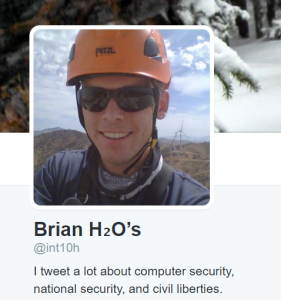
Brian H2O's Twitter profile

Brian H₂O’s (@int10h) had this to say via Twitter after diving into Kerberos:

@CloudInsidr yeah, because krb by itself only auths the client/server at the moment of handshake. there is not tunnel after, like ssl/ssh

— Brian H₂O’s (@int10h) March 7, 2016

Wow. Talk about surprises.

This looks like a serious case of IT “malpractice” and disinformation on the part of organizations advocating the use of Kerberos.

What if… what if this architectural flaw is somehow not an oversight, not a bug but a so-called “feature”?

@CloudInsidr not really. it wasn’t designed for tunneling. you can still do it, though. ssh w/ krb auth via gssapi does this.

— Brian H₂O’s (@int10h) March 7, 2016

Good to know. Is it worth the effort, then? (You decide.)

Thanks to Brian H₂O’s (@int10h) for this enlightening exchange!

Filed Under: administration and orchestration, alerts, cloud, edge and everything in between, cybersecurity and cyber warfare, industry gossip Tagged With: Kerberos, SSH

Leave a Reply Cancel reply

Your email address will not be published. Required fields are marked *

Subscribe

SSL/TLS Certificate Square (250 x 250)

Pearson Education (InformIT)

SSL/TLS Certificate Medium Rectangle (300 x 250)

Recent Posts

  • Upgrading from CentOS 6 to CentOS 7 and Beyond?
  • How To Figure Out Who is Signing In To Dovecot to Send or Retrieve Email
  • OpenSSH 9.9 Introduces Enhanced Quantum-Resistant Algorithms
  • OpenSSL 3.3 Final Release is now live!
  • How to Activate HTTP/2 with TLS 1.3 Encryption in NGINX for Secure Connections without a Performance Penalty
  • Is AWS sucking your budget dry? Strip it down to the nitty-gritty (without breaking stuff)
  • How to attach and mount an NVMe EBS volume on EC2
  • SELinux security contexts: correcting SELinux labels on a file system
  • Intel gobbling up Israeli Tower Semiconductor, Stock Goes Through The Roof
  • NGINX on AWS EC2: setting up a web server from scratch on a domain of your choice
  • Log4j RCE and mitigation techniques
  • Set up logrotate for Postfix

Symantec

Categories

  • administration and orchestration
  • alerts
  • AWS
  • Bitcoin
  • cloud, edge and everything in between
  • cryptocurrencies
  • cybersecurity and cyber warfare
  • databases
  • DNS
  • encryption
  • events
  • FinTech and InsurTech
  • homeland security
  • HTTP Security Headers
  • industries
  • industry analysis
  • industry gossip
  • Java
  • Linux
  • mail servers
  • networking
  • news
  • NGINX
  • people
  • php-fpm
  • reviews
  • SELinux
  • tips and tricks
  • Uncategorized
  • web servers in the cloud

Tags

AMI AWS AWS EBS Azure certificate cipher suites cryptography cyber defense cybersecurity cyber security Diffie-Hellman DNS DNS over HTTPS Dovecot EBS EC2 email encryption Fedora HTTP/2 HTTPS IBM letsencrypt Linux logs MariaDB MFA MySQL NGINX OpenSSL permissions php-fpm PHP 7 postfix RegEx Route 53 RSA SELinux SQL SSH SSL TLS TLS 1.3 TLS vulnerabilities WordPress

Archives

  • January 2025
  • November 2024
  • October 2024
  • May 2024
  • January 2023
  • March 2022
  • February 2022
  • December 2021
  • December 2020
  • November 2020
  • September 2020
  • January 2020
  • November 2019
  • August 2019
  • July 2019
  • April 2019
  • December 2018
  • October 2018
  • September 2018
  • August 2018
  • June 2018
  • May 2018
  • April 2018
  • February 2018
  • December 2017
  • November 2017
  • October 2017
  • August 2017
  • April 2017
  • February 2017
  • January 2017
  • November 2016
  • September 2016
  • August 2016
  • July 2016
  • March 2016
  • February 2016
  • January 2016
  • December 2015
  • November 2015
  • October 2015
  • September 2015
  • July 2015
  • February 2015

Recent Comments

    Wicked fast Networking (With a Government Clearance to Boot)

    ©2022 CybrAnalytiqa OÜ

    • Content purchasing and syndication